
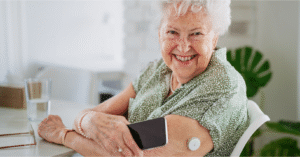
For years, healthcare was episodic; patients waited for symptoms to flare up, booked an appointment, and hoped the snapshot of data taken in the exam room was enough to go on.
But things are changing. Remote Patient Monitoring (RPM) is bridging the gap between doctor visits, turning healthcare from a series of “check-ins” into a continuous stream of support. Whether you’re a provider looking to streamline your practice or a patient wanting more control over your wellness, here is why connected care is the ultimate game-changer.
What is remote patient monitoring?
At its heart, RPM is about staying connected. By using clinically-validated devices like blood pressure cuffs, glucose monitors, and digital scales. Patients’ care teams receive their health data in real time, all from the comfort of their living room.
Think of it as a digital bridge. The device captures the data, then sends it to a cloud-based connected health platform, and AI-powered tools help clinical staff make sense of all the incoming data . It’s not just about gadgets; it’s about ensuring that your care team has the “big picture” of your health 365 days a year.
How Providers Win: Efficiency Meets Insight
For healthcare teams, RPM isn’t just “one more thing to check.” When implemented correctly, it’s a powerful tool for operational, and financial, success.
- Data-Driven Decisions: Instead of relying on a patient’s memory of their symptoms, providers get real-time data. This leads to faster, more accurate adjustments to treatment plans.
- Reduced Burnout: Smart platforms use AI to do the “heavy lifting.” Instead of sorting through thousands of stable readings, the system flags only the patients who need immediate attention.
- Scalability: By integrating RPM with organizations’ existing workflows, along with complimentary programs like Chronic Care Management (CCM), practices can provide high-touch care to more patients without needing to double their staff.
How Patients Win: Peace of Mind and Agency
The shift to remote care is a massive win for patient experience. It transforms the patient experience from being a “passive recipient” of care to an active participant.
- Proactive Prevention: When a provider can see a trend before it becomes an emergency, it saves the patient a stressful (and expensive) trip to the ER.
- Comfort and Convenience: For those in rural areas or with limited mobility, RPM provides essential oversight that keeps patients connected with their care team without the need for constant travel.
- Motivation Through Visibility: There is something incredibly empowering about seeing your own health data improve in real time. This “feedback loop” encourages patients to stick to their goals and care plans.
How RPM Integrates with Traditional Care
To truly see the benefits of RPM, it has to be more than just a standalone device. The most successful programs are comprehensive. They combine:
- Connected Devices: Reliable, easy-to-use hardware.
- AI Analytics: Tools that turn “data noise” into “actionable signals.”
- Supportive Billing: Ensuring the practice is reimbursed correctly so the program remains sustainable.
The Bottom Line
Remote patient monitoring is more than just a tech trend; it’s a blueprint for a more compassionate, proactive healthcare system. It allows providers to make more informed decisions and offers better support for patients.
When we move from reactive medicine to proactive management, everyone wins. Healthcare becomes not just something you “go to,” but something that stays with patients, ensuring they’re living your healthiest life every single day.