
The recycling bin has wheels, but somebody still has to pull it back up the drive. If that part is getting harder while a half-hour walk still feels fine, walking farther probably isn’t the answer.
The walk can stay. What’s missing is the sort of effort needed to pull, lift, and stand. Older adults don’t have to choose between gentle movement and strength work. They need somewhere in the week for both.
The Pull Back Up
Dragging a bin asks more than walking beside it. There’s weight through the arms, a grip on the handle, and, if the drive rises, a fair bit for the legs to do. The awkward part may last less than a minute, but it tells you where the gap is.
Other jobs give the same clue. The dog-food bag stays in the car until somebody visits. A deep drawer gets opened with a foot because standing again has become a nuisance.
I’d write down the job rather than starting with a list of exercises. “Pull the bin up the drive” is useful. “Get fitter” isn’t much help to anybody.
Two Days, Not a New Life
Twice a week is a sensible place to start. It also lines up with the CDC’s advice for adults aged 65 and older, which includes strength work alongside aerobic and balance activity. The usual walk can stay where it is. So can the gardening, errands, and the odd day when nothing much gets done.
For the bin, a supported row makes sense because it uses a pulling action. Chair rises and a low step give the legs some work. A light carry brings the hands and trunk into it. That’s already a session.
I’d use the same few movements the second time. If five chair rises are comfortable and the next five get untidy, stop at five for now. The number can change later; the chair isn’t going anywhere.
Home Changes the Choice
A gym or class gives you equipment and somebody who knows how to set it. Home removes the trip and the person who notices when a foot is in the wrong place.
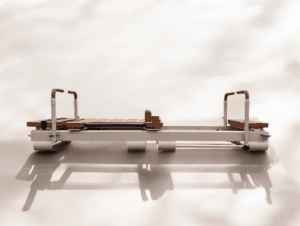
Carriage machines come with muddled names. A Lagree reformer machine usually means slow, demanding resistance work. A Pilates machine can be used more quietly, but neither label tells you how a certain exercise will feel under your body.
For someone who wants both ranges, a Pilates-inspired resistance machine is one way to set up at home. Core Collab’s Sculptformer has a moving carriage, springs, and platforms, and it can be used for controlled movement or harder full-body work. It is the brand’s alternative for Lagree-style training, not an official Lagree machine.
That’s enough about the name. The useful part is whether the machine can be set for the person who’s in the room. On a low-energy day, the range may be smaller and the pauses longer. On a strength day, the springs can ask for more.
The Awkward Bit
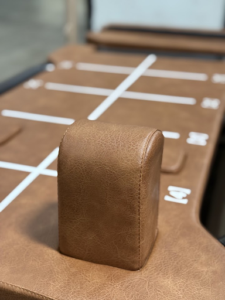
Getting onto a low carriage is easy to overlook from a product photo. So is turning from sitting to kneeling, or standing when the session is finished. I’d try those parts with an instructor before worrying about a longer routine.
Ask the instructor to write down the spring settings too. A lighter spring can reduce resistance in one movement and take away support in another, which is not obvious the first time. “Light” and “easy” are not always the same instruction.
Then look at the room. If a cane is used, it needs a place where it can be reached without leaning across the machine. Slippers, a phone cable, and the dog’s bowl can all move. The carriage can’t.
The first few sessions can be three exercises and a bit of practice getting on and off. Finishing early is cheaper than guessing your way through a sore week.
Wednesday
The strength work was Tuesday. By Wednesday morning the legs may feel used, and the usual walk suddenly looks long. Make it shorter. The normal route does not have to be finished.
Easy days have a habit of growing once the body warms up. Ten minutes into a walk, the stiffness has eased, and one more set suddenly sounds harmless. I’d still leave it. The walk did exactly what it was meant to do.
On some days, that lap around the block is enough. On others, there may be room for three carriage movements you already know well. Use the spring settings the instructor wrote down and save the experimenting for another day.
Check the next morning again. If the stairs have become a bigger job, Tuesday probably needs trimming; Wednesday does not need more added to it.
When Something Has Changed
The first session needs a little more thought after surgery, a fall, a dizzy spell, or a change in an ongoing health problem. This is not a good day to guess and hope everything feels fine.
The National Institute on Aging offers useful advice about exercising with long-term conditions, though it cannot answer the personal stuff. Can you kneel comfortably? Is getting down to the floor a bad idea for now? A doctor or physical therapist who knows what happened can give a clearer answer.
Pass that answer to the instructor in the same plain words. “No kneeling yet” is easy to work with. So is “I need the chair beside me when I stand.” Nobody needs to make a big thing of it.
Help from family can stay simple too. Move the footstool out of the way and write the spring settings on a card. Then let the person doing the exercise set the pace.
Thursday Comes Around Again
A few weeks later, bring the empty bin up the usual side of the drive. No stopwatch, extra weight, or steeper route just to make it count.
Maybe the usual pause is still there. Tell the instructor, along with how often the sessions actually happened. An exercise or spring setting may need changing.
Keep the walk. It was doing its job all along. One Thursday, the bin may reach the gate before anyone remembers there used to be a stop halfway.