
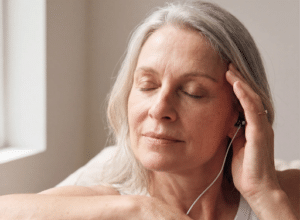
A daughter notices that her 76-year-old mother has started going to bed at 8:30 p.m., waking around 4 a.m., and dozing in front of the television after lunch. A sleep-tracking watch seems like an easy way to find out what is happening. A week later, the app reports little deep sleep and several periods of wakefulness. The daughter is worried; her mother is now worried too. But neither knows whether the numbers describe a normal shift in sleep timing, a treatable sleep problem, or simply the limits of a consumer device.
This is a common trap in the growing market for sleep technology for older adults: starting with a device before identifying the problem. Sleep does change with age, but frequent waking, severe daytime sleepiness and persistent insomnia should not automatically be dismissed as inevitable. Some devices help reveal patterns, others change the sleep environment, and a smaller group provides an active pre-sleep intervention. They do different jobs. Choosing well starts with understanding what has changed and what needs attention.
Aging Changes Sleep Patterns, Not the Need for Sleep
Older adults often become sleepy earlier in the evening and wake earlier in the morning. Sleep can also become lighter and more fragmented, with less time in some deeper stages and more brief awakenings. These changes are associated with shifts in circadian timing and sleep architecture; they do not mean that the body has stopped needing adequate rest. The National Institute on Aging notes that older adults generally need about seven to nine hours of sleep, similar to other adults.
That distinction matters in everyday life. Someone who naturally wakes at 5 a.m. after going to bed at 9 p.m. may be getting a reasonable amount of sleep, even if the schedule differs from the rest of the household. By contrast, someone who wakes at 2 a.m., remains awake for long periods and feels exhausted during the day may have a problem that deserves assessment. The clock time alone does not tell the story. Total sleep, daytime function, consistency and the person’s own experience all matter.
Before Buying a Device, Find Out What Is Interrupting Sleep
“Waking up at night” is a description, not an explanation. In older adults, several different issues can produce the same complaint, and they do not respond to the same solution.
Pain from arthritis or another chronic condition may wake someone when they change position. Urinary symptoms can lead to repeated trips to the bathroom. Some medications affect sleep, alertness or the need to urinate; changes in dose or timing may also matter. Restless legs syndrome can create uncomfortable sensations when a person sits or lies still. Depression, anxiety, grief and loneliness can alter sleep patterns as well.
Sleep apnea deserves particular attention because it can be overlooked when fatigue is attributed to aging. Loud snoring, gasping, witnessed pauses in breathing, morning headaches and pronounced daytime sleepiness are reasons to discuss evaluation with a healthcare professional. A consumer watch cannot rule out sleep apnea. Diagnosis requires an appropriate clinical assessment and, when indicated, a sleep study or validated home sleep apnea test.
A one- or two-week record of bedtime, wake time, naps, bathroom trips, pain, medication changes and daytime alertness can make a clinical conversation more useful. The aim is to identify patterns, not produce a perfect sleep score.
| What the family notices | What to investigate |
| Earlier bedtime and earlier waking, with good daytime function | Whether the schedule has shifted but total sleep remains adequate |
| Repeated waking to use the bathroom | Urinary symptoms, evening fluids and medication timing |
| Snoring, gasping or pauses in breathing | Possible sleep-disordered breathing; discuss clinical assessment |
| Leg discomfort or an urge to move at rest | Possible restless legs symptoms or medication-related contributors |
| New daytime sleepiness after a medication change | Whether the medicine or its timing affects sleep |
| Persistent difficulty falling or staying asleep | Insomnia and other medical or behavioral contributors |
The table is a guide for observation, not a way to diagnose a condition at home. Persistent symptoms, falls, confusion, breathing concerns or a major change in daytime function deserve professional attention.
Where a Wearable Vagus Nerve Device Fits
One emerging form of pre-sleep technology uses transcutaneous auricular vagus nerve stimulation, often shortened to taVNS. It delivers controlled electrical pulses through electrodes placed on selected areas of the outer ear associated with the auricular branch of the vagus nerve. The vagus nerve carries sensory information toward the brainstem and participates in autonomic functions. Researchers are investigating whether auricular stimulation can influence processes relevant to arousal and sleep, but the evidence should be interpreted according to the specific protocol studied.
A wearable vagus nerve stimulation device belongs in the active-intervention category, not the sleep-tracking category. It does not measure how many hours someone slept or identify sleep stages. Its role is to deliver a stimulation session before rest. For an older adult or caregiver considering this type of technology, the relevant questions include where the electrodes sit, how the earpiece is positioned, what intensity controls are available, how long a session takes, and what safety instructions apply.
There is some clinical research worth understanding, but it should not be overstated. A 2024 randomized trial in JAMA Network Open assigned 72 adults with chronic insomnia to active or sham auricular VNS. The active group had a 4.2-point greater reduction in Pittsburgh Sleep Quality Index scores than the sham group at week eight. However, the participants’ mean ages were 45.2 and 44.6, the study was conducted at a single center, and the protocol involved 30-minute sessions twice daily, five days per week. It was not a trial specifically in adults over 60, nor does it prove that every consumer device using auricular stimulation will produce the same outcome.
That distinction is important for families. Research on a stimulation method does not automatically validate every retail product, and an active wellness device should not be presented as a treatment for sleep apnea, medication-related waking or another underlying condition. Older adults should review product-specific contraindications and consult a healthcare professional when they have significant medical conditions, implanted electronic devices or questions about whether stimulation is appropriate.
What Sleep Trackers Can Tell You—and What They Cannot
A watch or ring can reveal patterns that are difficult to reconstruct from memory, such as a drifting bedtime, variable sleep duration or changes that coincide with activity.
But consumer sleep tracking is not the same as clinical sleep measurement. Most watches and rings estimate sleep using movement and signals such as heart rate. They do not directly measure the brain’s electrical activity in the way a clinical polysomnogram does. Their estimates of sleep stages are therefore inferences, not a direct reading of REM or deep sleep.
A 2026 study compared Fitbit Sense 2, Oura Ring, Withings Sleep Mat and Sleep Score Max with polysomnography in 19 older adults and 13 younger adults. In the older group, several devices underestimated total sleep time, while estimates of wakefulness and deep sleep also showed meaningful errors. The devices were particularly limited in identifying individual sleep stages. The study involved only one night and a small sample, so it cannot establish how every device performs for every older person. It does provide a strong reason not to treat a nightly deep-sleep figure as a clinical fact.
Use tracking for trends, not verdicts. A repeated change may be worth discussing, but a single poor score should not override how someone feels or symptoms such as gasping and severe fatigue. If checking the app increases anxiety, the tracker may be doing more harm than good.
For a broader comparison of smart sleep devices, it helps to separate products that observe sleep from those that change the environment or introduce an active pre-sleep input.
Choose Technology by the Job It Is Designed to Do
The phrase “smart sleep device” covers products with very different purposes. A tracker observes; an environmental system changes conditions around the sleeper; a pre-sleep intervention introduces an input intended to support the transition to rest. A product is not automatically better because it combines more functions. The useful question is whether its main function matches the problem.
| Device category | Main purpose | When it may be useful | Important limitation |
| Watches and smart rings | Estimate sleep timing and patterns from physiological signals | When the schedule or trends are unclear | Not diagnostic tools; sleep-stage estimates can be inaccurate |
| Under-mattress or bedside sensors | Track selected signals without wearing a device | When a person dislikes watches or rings | Cannot identify every cause of waking or diagnose apnea |
| Light and sound systems | Create consistent cues and a calmer bedtime environment | When routines are irregular or the room is disruptive | Do not treat medical causes of insomnia |
| Temperature-control systems | Adjust the thermal environment | When overheating or temperature discomfort repeatedly interrupts sleep | Only useful if temperature is a meaningful problem |
| Pre-sleep stimulation devices | Deliver a structured physical input before bed | When someone is exploring an additional wind-down approach | Evidence and suitability depend on the specific method and product |
Monitoring, environmental adjustment and active intervention should not be judged by the same standard. A tracker is valuable if it helps someone notice a pattern. A temperature system is relevant if heat is the disruption. A pre-sleep device is a different category altogether because it does not simply observe the night.
Make the Routine Easier, Not More Complicated
For older adults, usability is not a secondary feature. A device that requires tiny controls, frequent phone pairing or complicated setup may be abandoned even if its technology is interesting. Reduced dexterity, vision changes, hearing difficulties, skin sensitivity and discomfort wearing a watch overnight can all affect whether a product is practical. Charging, cleaning, replacement accessories, subscription requirements and access to customer support should be considered before purchase.
If sleep data are shared with family members, the older adult should understand what is collected and who can see it. Monitoring should support independence, not turn every awakening into an alarm. A simple diary may suit someone who finds apps confusing or stressful.
The most useful technology is often the one that removes a specific barrier. A bedside sensor may suit someone who dislikes wearing a watch. A light-based routine may help a person who has difficulty keeping a consistent bedtime. A pre-sleep stimulation device may interest someone looking for an additional wind-down input, provided its evidence, instructions and safety considerations are understood. More technology is not the same as better care.
What Should Come Before Another Sleep Gadget?
Technology works best when basic causes have been considered. A consistent wake time, morning daylight, daytime movement and a comfortable bedroom can support a regular pattern. Long or late naps may reduce sleep pressure at night. Caffeine, alcohol, pain and medication timing can also matter. These steps are not a cure-all, but they help establish whether a device is addressing a genuine need or distracting from a more direct solution.
For chronic insomnia, cognitive behavioral therapy for insomnia (CBT-I) is an established treatment and is recommended in clinical guidance. It addresses the behaviors and thoughts that maintain insomnia, rather than relying only on general advice about avoiding screens or keeping the bedroom dark. Sleep hygiene can support treatment, but it should not be treated as a stand-alone solution for persistent insomnia.
A consumer device may help reveal a pattern, but it cannot replace assessment for sleep apnea or other disorders. Ongoing sleep difficulties, snoring with gasping, marked daytime sleepiness or sudden behavioral changes warrant a healthcare conversation—not another product purchase.
Better Sleep Decisions Start With Better Questions
Sleep after 60 can look different without automatically being unhealthy. Earlier sleep timing and lighter nights may be part of aging, while persistent insomnia, breathing problems, pain and medication effects deserve separate attention. Families get better results when they distinguish those possibilities before choosing a device.
The role of sleep technology is to make a specific part of the problem easier to understand or address. Trackers help reveal patterns; environmental devices change the conditions around sleep; active interventions provide a different kind of input before bedtime. None should be expected to solve every cause of poor sleep.
For older adults and the people who support them, the best device is not necessarily the one with the most sensors or the highest score. It is the one that answers a real question, fits comfortably into daily life and supports—not replaces—good clinical care.
References
-
National Institute on Aging. Sleep and Older Adults. National Institutes of Health.
-
Searles ME, Licata A, Cucinotta M, Kainec K, Spencer RMC. Performance Evaluation of Consumer Sleep-Tracking Wearables and Nearables in Healthy Young and Older Adults. Sleep Advances. 2026;7(1):zpag006.
-
Zhang S, Zhao Y, Qin Z, et al. Transcutaneous Auricular Vagus Nerve Stimulation for Chronic Insomnia Disorder: A Randomized Clinical Trial. JAMA Network Open. 2024;7(12):e2451217.
-
Qaseem A, Kansagara D, Forciea MA, Cooke M, Denberg TD. Management of Chronic Insomnia Disorder in Adults: A Clinical Practice Guideline From the American College of Physicians. Annals of Internal Medicine. 2016;165(2):125–133.