
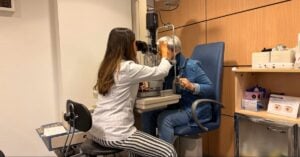
For older adults in Garden City and nearby Nassau County communities, choosing an eye doctor is a health decision as well as a practical one. A small change in eyesight rarely announces itself as a medical issue. It may show up instead in the details of daily life: a medication label that takes longer to read, a staircase that feels less secure, or a face across the room that is harder to recognize. For older adults and the family members who support them, these quiet shifts are worth taking seriously because vision is closely tied to independence, mobility, and confidence at home. Regular, risk-aware eye care is part of healthy aging, and choosing a local provider deserves more thought than convenience or an advertised price.
Why Eye Health Matters for Aging and Independence
Several common eye conditions in later life develop gradually. Cataracts cloud the lens over time. Glaucoma can damage the optic nerve before a person notices a change in vision. Age-related macular degeneration affects the sharp, central sight needed for reading and recognizing faces, while diabetic retinopathy can threaten vision in people living with diabetes. According to the National Eye Institute, many serious eye diseases have no early warning signs, so waiting for symptoms is not a reliable strategy.
The consequences reach beyond the eyes themselves. Untreated vision problems are associated with greater difficulty reading, walking safely, driving, and managing medications correctly. For an older adult who wants to remain independent, or for a caregiver helping a parent stay in their own home, protecting eyesight is part of protecting everyday function.
How Often Should Older Adults Have Eye Exams?
There is no single schedule that fits everyone. Guidance from the American Academy of Ophthalmology’s Comprehensive Adult Medical Eye Evaluation Preferred Practice Pattern suggests that adults age 65 and older who have no symptoms and no relevant risk factors should generally receive a comprehensive eye evaluation every one to two years. That interval is a starting point, not a rule. People with diabetes, high blood pressure, a family history of glaucoma or macular degeneration, previous eye conditions, or any noticeable change in vision may need to be seen more often.
The right interval should be set by an eye-care professional who knows the individual’s health history. For families organizing care, the useful takeaway is simple: an exam that was “fine a few years ago” may already be overdue, especially once health conditions or new medications enter the picture.
What a Comprehensive Dilated Eye Exam Can Check
A comprehensive dilated eye exam goes beyond updating a glasses prescription. During the visit, drops are used to widen the pupils, allowing the eye-care professional to examine the retina and optic nerve with a magnifying lens. The evaluation typically also measures visual acuity and assesses peripheral vision.
This kind of examination can help detect glaucoma, diabetic retinopathy, and age-related macular degeneration before a person notices symptoms. Anyone who has only had a quick vision screening at a pharmacy or during a driver’s license renewal has not had this level of medical assessment. Asking what an examination includes can help older adults and caregivers understand whether the visit addresses eye health as well as visual sharpness.
Choosing an Eye Doctor in Garden City
For older adults in Nassau County, the practical question is how to evaluate a local provider. A few criteria matter more than marketing claims:
- Clinical scope. A practice with ophthalmologists on staff can evaluate and manage medical eye conditions such as cataracts, glaucoma, and retinal disease, not only refractive needs.
- Risk-aware examination planning. A provider should ask about diabetes, blood pressure, medications, and family history, then consider those factors when discussing follow-up.
- Clear location and contact details. Families coordinating care should be able to confirm the address, hours, and phone number without guesswork.
- Communication with caregivers. Older adults often attend appointments with a spouse or adult child; clear explanations make follow-up easier to manage.
- Transparency. Providers should be willing to explain findings, next steps, and costs in plain language.
Someone searching the phrase eye doctor garden city can use these criteria to compare local practices. Clinical breadth, risk-aware examinations, communication, and clear contact information are more useful comparison points than advertising language alone.
A Local Option for Comprehensive Eye Care
One documented local option is Stahl Eyecare Experts, which lists a Garden City office at 450 Endo Boulevard, Garden City, NY 11530, with the phone number 516.832.8000. The practice notes that hours may vary, so confirming current appointment times directly is sensible. The Garden City location page lists ophthalmologists Thierry Hufnagel, MD, Marc S. Werner, MD, and Benjamin Chang, MD, as well as optometrist Silgi Varghese, OD.
Stahl Eyecare Experts describes a broad ophthalmic scope that includes general eye care and treatment areas such as cataracts, glaucoma, retinal disease, corneal disease, and laser vision correction. These descriptions do not replace an individual evaluation. Seniors and caregivers should ask which services are relevant to the person’s concerns and what a first visit involves, then confirm current details with the practice.
Questions Seniors and Caregivers Can Ask
An appointment is more productive when it starts with the right questions. Before visiting an eye doctor, older adults and the relatives supporting them can prepare a short list tailored to the person’s health history, medications, and daily routines:
- What type of examination is appropriate given my age and health conditions?
- How often should I return, and what factors would change that schedule?
- Do my diabetes, blood pressure, family history, or medications affect my eye-health risks?
- What do the findings mean for reading, walking safely, driving, or managing medications?
- What records, medication lists, or questions should I bring to the next visit?
The answers will differ from person to person. The clinician’s recommendations should be based on the individual’s findings and risk profile rather than a generic timeline.
When to Seek Prompt Medical Advice
Routine scheduling works for routine needs, but a new or noticeably worsening change in vision should not wait for the next annual checkup. Anyone who experiences a sudden or rapid change in eyesight should contact an eye-care professional promptly and describe what has changed and when it started. How urgent the situation is depends on the specific symptom and clinical context, so a direct conversation with a professional matters more than self-diagnosis.
A Simple Next Step
Healthy aging is built from small, deliberate decisions, and eye care is one of the easiest to act on. Check when the last comprehensive dilated eye exam took place, review current health conditions and medications, and write down the questions that matter most. If an evaluation is due, or if something about vision has changed, contacting an eye-care professional in Garden City or n