
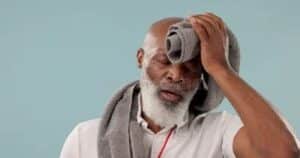
Excessive sweating in the elderly is not always a response to heat or activity. It may reflect a medical condition, medication effect, or hyperhidrosis—sweating beyond the body’s cooling needs. New, persistent, or night-time sweating should be discussed with a clinician.
Why Sweating Can Change With Age
Sweating cools the body, but health and medicines can alter its pattern. Generalized sweating warrants more review than localized sweating. Timing and associated symptoms offer clues.
| Possible contributor | What it may look like | Helpful next step |
| Heat, activity, or stress | Sweating follows a clear trigger | Adjust clothing and room temperature |
| Medication effect | Symptoms follow a new medicine or dose | Ask for a medication review |
| Medical condition | New generalized or night-time sweating | Arrange an assessment |
| Hyperhidrosis | Sweating without an obvious cooling need | Discuss treatment options |
Record timing, soaked bedding, and medication changes.
Medical Causes Worth Considering
Fever or infection, low blood sugar, thyroid disease, anxiety, menopause, neurological disorders, and heart or lung conditions can contribute to excessive sweating. A sudden change deserves attention because it may not be explained by age alone.
Contact a healthcare professional promptly when sweating occurs with:
- Chest pain, pressure, shortness of breath, or a fast heartbeat.
- Fever, unexplained weight loss, fainting, or marked weakness.
- Confusion, dehydration, or overheating during hot weather.
- Drenching night sweats or a sudden unexplained change.
These signs do not identify one diagnosis, but they are reasons not to delay assessment.
How Medications May Play a Role
Some medicines increase sweating directly or affect temperature regulation. Examples include certain antidepressants, pain medicines, diabetes medicines that may cause low blood sugar, and drugs affecting hormones or the nervous system. Multiple medicines also complicate timing.
Do not stop or change prescribed medicine independently. Bring an up-to-date list—including over-the-counter products and supplements—to a pharmacist or prescriber. They can assess whether timing fits a side effect and whether testing, an alternative, or a dose adjustment is appropriate.
Practical Comfort Measures
While arranging care, choose breathable, loose layers; change damp clothing promptly; use moisture-absorbing socks; and drink fluids unless fluid restrictions apply. A stronger antiperspirant may help localized sweating, while deodorant mainly addresses odor.
For persistent sweating affecting sleep, mobility, or daily routines, a dermatologist can discuss hyperhidrosis treatments(opens in new tab) selected for the body area and underlying cause.
Frequently Asked Questions
Is Excessive Sweating a Normal Part of Aging?
No. Older adults can sweat normally in heat or during exercise, but ongoing sweating without a clear reason deserves a healthcare review.
Can Medication Cause Night Sweats?
Yes. Medicines can contribute to sweating, but night sweats may also have medical causes and should be reported.
What Should Caregivers Track?
Note timing, triggers, affected areas, symptoms, fluid intake, and recent medication or dose changes. This can make the appointment more productive.