The Pro’s and Con’s of Pet Ownership for Seniors In Their Homes

Pets play important roles in many senior’s lives

The pro’s and con’s of pet ownership for seniors are important when Dog cat imageconsidering a new dog or cat to join the household because each family and pet is different in many ways. A good fit makes for a good outcome, a happy life together for the pet and everybody involved.

Cats, dogs, and birds often provide companionship and emotional support to their human family members. Seniors are no different from younger pet owners who live with pets as members of the family because of love and companionship. Often the pet fills an empty nest or empty heart in a senior’s life when a partner or child is no longer here.

Pets come with responsibilities like other family members. These pro’s and con’s can help seniors and pets be a good fit for a long happy life together. 

Pro’s for pet ownership for seniors

1. Pets provide companionship to seniors who spend long hours alone in their homes.

2. Pets provide seniors with something to do during the day and exercise.

3. Pets and seniors enrich each other’s lives.

Con’s for pet ownership for seniors

1. Seniors who are use to living alone may not adjust to the demands and noise pets make on a daily basis. Some dogs bark to much when visitors come by and some cats require more attention than other cats.

2. The pet overburden the senior owner with responsibilities, such as the daily potty walk or clean-up, unexpected veterinary bills or regular grooming visits.

3. Some pets do not fit well in senior households due to the pet’s temperament, training or bad habits.

One of the best ways to decide if a pet is the right choice for senior ownership is to discuss the pro’s and con’s with the senior so they can decide if a pet is best for their lifestyle.

Mobile Dentistry Benefits for an Aging Community

by: Dr. Greg Grillo (dentably.com)Dentist image

A mobile dentist is a dentist who provides access to in-home dental care to someone who may otherwise not be able to visit a dental office. A dentist may have a mobile dental clinic of their own or it may be a service offered at one’s dental office. I have been practicing dentistry for 17 years and believe everyone should have access to high-quality dental care. Unfortunately, this access is becoming a major problem facing dentistry today. Because of this, mobile dentistry has been on the rise. Having a mobile dentist visit one’s home can be especially beneficial to aging individuals who may have a hard time getting to a dental office. Here’s why.

  1. Save time

Mobile dentistry can be beneficial to maintaining good oral hygiene as you get older. As one ages, there are other health-related ailments that an individual might suffer from. Because of this, oral hygiene can, unfortunately, take a back seat. In fact, according to the American Dental Association, one out of every five people over the age of 75, haven’t seen a dentist in the past five years. This is concerning because along with other health-related issues, there are many dental concerns among senior citizens.

In order to continue having a healthy mouth, a mobile dentist is very beneficial. Since mobile dentists visit the individuals home, scheduling a mobile dentist can save caretakers time by not having to drive to the dental office. Mobile dentists will also often visit senior care communities and service many patients at once. Eliminating the time and stress of finding transportation makes it much easier for senior citizens to receive dental care.

  1. Dental emergencies

 Dental emergencies are a serious concern among senior citizens. Individuals over the age of 60 are more prone to dental conditions such as cavities, gum disease, and tooth loss. As mentioned before, access to transportation makes it difficult for the elderly to receive the dental care they need. If someone experiences a dental emergency, there may be no way for them to receive care which can lead to potentially life-threatening situations. This is where mobile dentistry might be useful. Like regular dental clinics, most mobile dentists have available on-call emergency hours. Having a dentist available to visit a patient’s home when they experience a dental emergency could save their life. This is why mobile dental clinics are important.

  1. Other mobile health care providers

There are other mobile healthcare services that many doctors provide for the elderly. Podiatrists, x-ray services, and even primary health care providers often have mobile services for senior citizens and senior communities. It’s essential that individuals are still able to receive the care they need and it can be stressful for caretakers to schedule and provide transportation to various appointments. With mobile health care providers, it can be much easier for seniors to receive care. That’s why more and more health care offices and businesses are providing mobile services to patients.

As one ages, it is essential to their overall health and well-being that they continue to receive dental care and practice good oral hygiene in their home. The reason many senior citizens don’t seek dental care from a dentist is it’s not easily accessible to them. However, with mobile dentistry, a dentist can visit their home and provide them with treatment. This makes it much easier for aging individuals to receive the dental care that they need.

Ways to Attract More Home Care Clients

In 1985 older adults accounted for 11% of the U.S. population. By the year 2030, that number is expected to rise to 20%. Today, there are more than 46 million Americans over the age of 65, and by the year 2060, that number will more than double to more than 98 million and the elderly will comprise of nearly one in four U.S. residents.

The statistics alone confirm the importance of health care services for the elderly. Whether it’s nursing homes, hospice care or home care, the need for these services will  increase substantially over time. As a home care provider, it is up to you to convince potential clients, and their families, that home care is the best option and your services are better than your competitors.

After more than seventeen years of working in the home care industry, I have learned what potential clients, as well as their families, want to hear the services you provide in order to make the best decision for themselves. Here are three advantages I have discovered to be most important when choosing one home care provider over another.

  • First thing: Independence. In many cases,  independence is one aspect of life that a potential client can control. Home care allows individual the ability to maintain their regular schedules and routines, and the choice of when to eat, sleep and bathe. Independence is an important luxury to someone who feels as if they’ve lost control of everything in their life. Ensuring your potential client that home care will allow them to maintain their independence can significantly increase their interest in your services.
  • Second thing: Cost. Perhaps one of the most beneficial reasons for a client to choose home care is it costs significantly less than other forms of care. Many people over the age of 65 live on a fixed income, and with the cost of living and healthcare steadily increasing, saving money might be crucial for them and their families.
  • Third thing: Health. The risks for contracting a sickness or an infection while in hospital or nursing home environments are significantly reduced when choosing home care instead. With in-home care, the client is allowed to receive medical and personal care in the comforts of their own home. These options might increase the chances of the potential client and their family members choosing to use your home care services as opposed to alternative services.

One important thing to remember is to take advantage of the fact that the pros of choosing home care can outweigh the cons. You just have to know what services your potential clients feel are most important. In my experience, the three aforementioned concerns are most desirable.

5 Ways for Caregivers to Avoid Guilt

by: Nicole Hanna, Executive Director, Vineyard HendersonTips image

Bio: With over 20 years of leadership experience with an expansive skill set in dementia education, training and support, long-term care, nursing, senior fitness and rehabilitation, Nicole brings expertise in operational efficiencies and leadership development, while prioritizing the quality care and happiness of her community.

With more Americans living well beyond their 70s, more adult children are left in a position where they must be caregivers for their aging parents. Pressure comes from all sides, including the judging eyes of others in our society determining that something is “right” or “wrong,” family relationships and dynamics, and finances.

Caregiving can take a big toll on families. Some families can mend their differences and come together to focus on the best interests of the parent or parents. Others simply look for the most cost-effective solution and write a check, to be spared dealing with the day-to-day details. The bottom line is that almost all caregivers experience guilt over what they could be doing or what they feel they should be doing.

The importance of boundaries

Setting boundaries in these familial relationships are vital to protecting your health. However, boundaries are often crossed or neglected, especially in the rushed and seemingly endless hours of caregiving.

Caregiving is more effective for all parties involved when limitations are set. Knowing that you have a set boundary will allow you as a caregiver to be more open-hearted and relaxed when taking care of your loved one. For example, knowing that you have a break coming up may be exactly what will give you strength to push through two hours of a challenging day.

Having the opportunity to serve in the healthcare and hospitality industry for a few decades leading up to my current role at Vineyard Henderson has allowed me to witness firsthand the impact that caregiving can have with my team, my families, and my residents. Getting to sit with so many to discuss frustrations, fears, confusion, anger, sadness, and so many emotions that join this ride through life, it is often so important to remember the basics and reevaluate our actions to have greater benefit for us as caregivers and for others that we provide care to.

There are five essential ways that I’ve found for caregivers to reduce or avoid guilt.

  1. Learn to say no

People are going to make unreasonable demands – that’s what people do. But here’s the thing: Just because someone asks you to do something doesn’t mean you should do it.

  1. You are not responsible for how others feel

It’s not your job to make everyone else comfortable all the time. Your loved one’s annoyance isn’t an indication of your incompetence; it’s a sign of their discomfort.

  1. Expect a little guilt

Guilt won’t kill you. Guilt is normal. Unless you’re an enlightened being, you’ll feel guilty as a caregiver. But also know this: guilt is the ego’s sneakiest disguise. So, acknowledge guilt when you feel it, let it roll over you and then move on. Because if guilt is motivating you to say yes when you want or need to say no, then it’s limiting your potential to have the impact you were born to have.

  1. Manage your boundaries

Set boundaries with yourself. Treat your superego – the one who wants everything to be perfect — like the person who just asked you to volunteer for a big job at your kids’ school. You have to respond to this voice in your head just like you would an actual person who is making suggestions that require a firm “no.”

  1. You are enough

Your being is more important than your doing.  Whatever you’re doing to please other people is only temporary relief for that deep feeling of uneasiness about yourself that almost everybody has to some extent. Nothing you do – whether good, bad, or great, can change the fundamental awesomeness of who you are. You are enough without DOING anything.

Caregiving is a very important task, and regardless of how big your role in the caregiving may be, it puts a lot of stress on everyone involved. Take heart that you are not alone.

3 Simple Steps to ROI Reporting for Your Social Media Marketing Strategy

social media imageOne of the biggest marketing strategy misconceptions is the idea that social media marketing is “free.” This word tends to excite business owners, having them hope for instantaneous and effortless success. The result from this misconception is too often underwhelming and frustrating, but it doesn’t need to be.

Social media marketing is not free. Even without launching paid advertisements on social media, there are content creation and management costs in a successful social strategy. However, social media marketing can be an extremely effective and substantially lower cost option than many traditional content strategy methods. In a 6th Annual Report on Social Media Marketing, Social Media Examiner found that, “by spending as little as 6 hours per week, over 66% of marketers see lead generation benefits with social media.” Good content (through any channel) takes time, skill, and maintenance. Demonstrating ROI through social media can be a challenge, but it is possible.

Social Media Marketing Strategy: How to Measure ROI

Set Actionable Goals

The first step in any strong content strategy is defining concrete goals. Social media marketing is no different in this regard. To measure ROI, you need to have a clear understanding of what campaign success would look like. Are you hoping for an increase in traffic, newsletter sign-ups, content downloads, or product purchases? Establish an average of your current stats for these goals before adding social media; this will give you a clearer picture of how social media impacts your goals.

Short Links

When sharing your content on social media, the use of short links can make traffic easily measured. Before posting your content to your social media channels, shorten the URL with a service like Bitly to track clicks, referring channels, and even location demographics.

UTM

Creating UTM parameters for your campaigns “allows for analytics to interpret the origin and basic engagement information about the visitor.” UTM parameters are tags added to your URL that provide insight into your audience source, channel, keyword alignment, and content element creating engagement in your campaign. Incorporating these elements into your social channel content design supports clearer ROI measurement.

Analytics User Flow

In addition to referencing specified UTM engagement, your analytics user flow/path can support clear insight into conversion success. Creating a download/sign-up/purchase confirmation page enables you to drill down your analytics for conversion source. Follow your audience from acquisition source (social media channels vs. other sources) through product pages, to the shopping cart, check out, and confirmation page. Ensure your confirmation page is not indexed to avoid search traffic. So, while social media is not free, there is immense value in a social content strategy, and reporting social ROI can be relatively simple with the right insight and tools.

The Increasing Demand for Niche Retirement Communities

by: Mattis W.

When more people from all walks of life are hitting their retirement age, it implies the need for a change in an area which society often neglects but should pay close attention to – senior housing.

Let’s take a closer look at the underlying trends to understand what is happening in senior living.

The Cresting Silver Tsunami

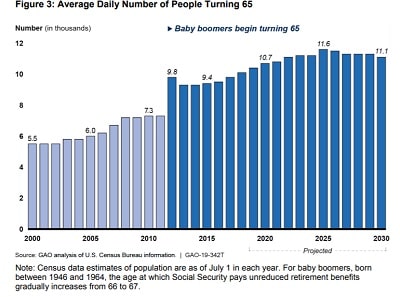
According to population and retirement research conducted in 2019 by the U.S. Government Accountability Office, the Baby Boomer Generation (people born between 1946 and 1964) is reaching retirement age in record numbers.

As stated in the full research report, the first boomers began receiving Social Security retirement benefits in 2008, and growing numbers will become eligible for Social Security benefits in the coming years. The analysis indicates that the number of baby boomers turning 65 is projected to increase from an average of about 10,200 per day in 2018 to more than 11,000 per day in 2029.

Although the mass wave of retirements was initially projected to hit government in 2011, the recession put many of these retirement plans on hold. This gave government agencies a short while to breathe, but now it appears that the long-awaited silver tsunami has finally arrived, along with the increased demand for senior living options.
Different Generation, different needs?

According to Andrew Carle, a founding director to senior housing program at GMU in Virginia, the Baby Boomer generation is ‘different’. Unlike older generations, the retired Baby Boomers are not keen on the idea of the ‘traditional’ or ‘old’ senior housing options but want to explore their hobbies and interests.

What does this imply in a society which was used to the idea of putting retirees in a place that has become less interesting to retiring Baby Boomers?

For one, the demand for housing for the aging population has increased and appears to remain high as more and more Boomers are leaving the workforce and looking for senior living communities.

At the same time, the expectations for senior living communities have also risen, enabling seniors to spend their golden years in an exciting way.

Same Retirement Communities, But a Little Different

According to Carle, when interviewed by the Chicago Tribune, a typical retiree starts at the age of 65, putters around the house, travels around and enjoys gardening. However, 10 years down the line, boredom sets in and Boomers seek more company and assistance.

It is at this crossroad where demand for niche senior communities is most likely. It is also reflective of the attitude change between generations. Baby Boomers, more so than the previous generation, seeks peers and amusement.

Introducing the “niche senior community’

Unless you know someone who is planning his retirement in a senior living community, the concept of niche senior communities may be new to you.

Given the age-old adage which suggests that °birds of the same feather, flock together; the niche senior community is a trend among retirees who are seeking companion amongst their fellow retirees, thus building a community of older adults who share similar interests or passions.

Examples of niche retirement communities

Art Communities 

The niche retirement communities are already here. An example of this is  the Senior Arts Colony at Long Beach, which was launched in 2013. It offers art classes, galleries of course art equipment for it’s seniors. There are also communities that offer dance and art studios, theater-esque clubhouses, and performance art classes aimed at fostering the artistic talent of their senior students.

Country Communities 

But there are also other areas of interest that a senior niche community  would cater to for the retirees, said Andrew Carle. For instance, in Nashville, Tennessee, there’s a community of elders who are exposed to the country music which appeals mainly to seniors who are either country enthusiasts or were former musicians themselves.

It also is equipped with the right platform for making live performances as well as rooms to make recordings as needed.


Golf Communities

Communities such as the River Landing Community in North Carolina are specifically designed for senior golf enthusiasts. Some even offer shops to find the best golf clubs, along with Shuttles to various golf courses in the area or even a dedicated course on site.

As golf is one of the healthiest sports for senior women and men, it easy to see why retirees want to invest more time into it.

Other Niche Communities

For well-off retirees who are capable of financing a retirement setting fueling their passion, niche communities exist to cover topics such as:

  • Recreational vehicles
  • Motorcycles
  • Cars
  • Fitness
  • Equestrians
  • Astronomy
  • Academia and lifetime learning
  • Military Veterans

Is Housing Based on Particular Niches the Future for Seniors?

While it’s difficult to pinpoint precisely when the first few niche communities were established, there were already 100 of them in place since 2011. This number was also set to rise in the subsequent years which puts the demand for the niche retirement communities in an upward trajectory since.

In California alone where three established artist colonies are in place, developer Meta Housing in partnership with the non-profit organization EngAGE claim that their occupancy level seldom drops below 95%, according to Senior Housing News. So if consistent demand allows, more development is likely.

Is living in a niche senior living community right for me (or close family members?)

To decide whether or not a niche living community could be the right choice for you or close family members, you have to consider multiple factors:

  • What are you/they interested in? Unsure? See our latest list of activities for seniors and see if you find a match?
  • Is this interest determining your/their lifestyle to a large extent? Being interested is not enough to warrant a move to a niche living community, passion and desire to expand on that passion is required
  • Where do you/they want to live? While niche communities are growing in number, they are still few compared to the market of senior living options, so location choice matters.
  • Do you/they have the means to pay for it? As advertisers know, passionate people pay a premium. It is for this reason, that most niche living communities are upscale and more expensive than alternative options.
  • Is space available? Refer to New LifeStyles’ retirement community page to find availability.

This article was contributed by Mattis Weiler. He’s the General Editor of Fast Learners, a website helping senior golf enthusiasts and others to become better at golf.

Continuum: Private Duty Home Care and Family Partners: Day Services/Residential Home with Barth Holohan

Barth Holohan

Barth Holohan is the president and founder of Continuum: Private Duty Home Care and the co-founder of Family Partners: Day Services/Residential Home. He started his home care business in 2002, his day services business in 2008 and his residential home business in 2017. Barth has been in the healthcare industry for over 20 years.

“I have a background in healthcare and social work and have always enjoyed being around seniors, so after I graduated from undergrad at the University of Kentucky, I worked for a healthcare consulting company,” Barth said. “I later went to graduate school at Washington University and St. Louis University and got a dual degree in business, an MBA (Master of Business Administration), and an MSW (Master of Social Work), with a concentration in gerontology. When I graduated, I saw the need for being able to help people be independent in their homes, because most people don’t want to go to a community, they want to be independent in the comfort of their own home.”

Barth said Continuum: Private Duty Home Care is made up of a care team that strives to help their clients remain safe, healthy and independent in their homes, no matter what their care needs. Continuum Home Care’s Personal Care Services include: meal preparation, light housekeeping, companionship, bathing assistance, laundry and linen service, shopping and errands, transportation and much more.

“The way Continuum differentiates itself is by being based on what we call a Care Management Model, where we use social workers and nurses to follow the care of people that want to stay independent in their home,” Barth said. “We provide all of the services that people need, which the government doesn’t pay for, in order for people to stay in their homes.”

Family Partners: Day Services/Residential Home is an assisted living community that provides the best possible environment for those with dementia by providing an environment and the stimulation to help individuals live as independent and long as possible.

Barth said the Family Partners Day Services is a Day Center for individuals with dementia who are still living at home and need a place to go during the day that provides them with the help and supervision that they need to be as independent as possible. “When caregivers work, the nice thing about our Day Center is that it provides daily and hourly supervision to seniors with dementia that you can’t get in a senior community or at home. There’s just something special about seniors with dementia being around other seniors with dementia and having activities geared toward them.” According to Barth, he said that at the Day Center, they strive to do anything they can to help families take care of their loved ones with dementia. “We’ll do anything from having dinner made and ready for them, so when they pick up their loved one, they can take dinner home with them. We will order all of their personal care and medical products, we bathe and dress them and just do anything that needs to be done in our adult Day Center so families can interact with their loved one and not be caregivers when their loved one gets home.”

As for the Family Partners Residential Home, Barth said it is in an eight-bedroom residential neighborhood where people with dementia live when they can’t live at home any longer. It ensures a home-like person centered care.

“We have clients that we’ve helped for many, many years stay independent in their home,” Barth said. “For us to be able to provide services that allow them to stay in their home for up to 10 years and longer is huge.”

Barth’s businesses are located in the St. Louis area where there’s plenty of business, so Barth said he isn’t looking to expand to other cities right now, but could see his businesses expanding throughout Missouri in the future.

“As for my businesses, I don’t get too stressed out with running them every day because of the executive directors that manage the day-to-day operations of the businesses, which is very helpful,” Barth said. “I am blessed to have a management structure that is not reliant on me being the only person in charge. Plus, with the Family Partners business, I have a business partner who helps me.”

When it comes to industry partners and working with/helping them, Barth said that whenever he has somebody who calls his companies and can’t benefit from the services, then his job is to refer that person to other businesses who can help him/her. “We help people in whatever way possible, so if that means using another company or community to do a different service, then that’s what we’ll do because it’s not about us, it’s about the client.”

Preparing For In-Home Care

by: James Fleming

If you are a family caregiver, you may be supplementing your caregiving responsibilities with an in-home care attendant for your aging parent. In-home care attendants offer assistance helping with everything from activities of daily living like dressing and eating to instrumental tasks like checking mail, refilling prescriptions, and arranging transportation.

They also uniquely provide companionship, emotional support, and mental stimulation that can help older adults feel more engaged and purposeful in life. Once you have come to a joint decision on a home care agency or home care worker, it’s time to prepare for their arrival.

If you’re initiating home care services for your loved one, keep these simple preparation tips in mind:

Discuss your parent’s need with your parent: You may know all the caregiving tasks your loved one requires of you on a regular basis, however, have you stopped to ask them if there is anything else they need help with that they haven’t mentioned. What are the barriers keeping your loved one from living their ideal life? Perhaps there is something more a home care attendant can help with that you were not yet clued in on because your parent didn’t want to burden you.

Print and post a medicine schedule. If your new home care attendant is assisting with medication refills or making sure your loved one takes their medicine on time, it is critical that you have a clearly posted medicine schedule for them to reference. Remember to include the name of the medication, the dosage and frequency at which it is taken, any adverse side effects to watch out for, and the prescribing doctor’s contact information.

Set your loved one up for success. In-home care can be a tool of empowerment that actually helps your loved one build confidence and self-reliance as they can see to more daily activities and tasks. Set them up for success by equipping them with ease-of-use tools like reacher grabbers and dressing aids, adaptive utensils to simplify preparing food and eating, and mobility aids as needed for getting out for walks or exercise.

Set up remote monitoring. If you are interested in seeing how your loved one gets on during the day with their new home care attendant, consider setting up remote monitoring. Many baby monitors these days come with mobile app syncing so you can safely check on your loved one from the convenience of your smartphone. You may also request a live video chat via Skype or Facetime during the day with your loved one and their home care attendant too.

Share the schedule. A daily routine can provide structure and stability for older adults, especially if they have mild cognitive impairment or medical needs (i.e. taking medicine, checking blood sugar levels, etc). Share your parent’s typical schedule with the new home care attendant and even consider posting it so they can stay on track. It can also help your loved one feel more familiar with their day even though a new person is in their home helping them out.

Let them in on the nuances. While your home care attendant will get to know your loved one and form their own relationship with them, you know them best and sharing little details that could help your loved one feel more at ease with a new person is good. Perhaps there is a story your loved one enjoys telling, or a pillow they like to sit with while they watch TV, or a friend they like to call after lunch.

Make necessary home upgrades. If your home care attendant is helping your loved one get up, get dressed, use the bathroom, or take a shower, your home may be in need of some quick, easy upgrades. Installing rails on the bed and grab bars by the toilet and shower will simplify these tasks for your home care attendant as well as make the whole process safer for your loved one.

Suggest meal ideas. If you have not prepared meals to be reheated by your home care attendant, you may instead want to list off available items in the house for eating as well as what your loved one likes to eat for breakfast, lunch, and/or dinner. If your parent puts up a bit of a fight regarding food with their home care worker, they’ll be able to say too that they spoke with you and they know that your parent loves peanut butter and honey sandwiches, for example.

Set expectations. Be ready to set expectations for your home care worker about not just what your loved one needs help with, but what you expect as far as punctuality, phone use while on the job, basic cooking and housework skills, and communication with you while they are with your loved one.

Top 10 Ways To Increase the Quality of Life for Seniors In Senior Homes

by: Cynthia Madison

According to the Centers for Disease Control and Prevention, more than 1.5 million people live in nursing homes in the U.S and although satisfaction levels among residents and families have increased exponentially over the years, there still are many improvements that can be made to increase the quality of life.

To do that, it’s essential to look beyond the basic requirements of cleanliness, safety and staff professionalism and see senior homes from a holistic perspective: senior homes shouldn’t just be buildings that give seniors a roof over their head and medical supervision, but a new home where they can live in peace, dignity and happiness. Only by doing this can senior homes convince seniors and their families that senior care is a beneficial long-term solution, not the beginning of the end.

1.      Give nursing home residents more personal attention

New research released by the School of Public Health reveals that loneliness is a major issue in nursing homes and that the amount of personal attention received from the staff influences quality of life directly. On average, nursing home residents only spend a cumulated 20 minutes with staff every day, which is not enough to closely monitor residents’ physical health and wellbeing. To increase quality of life, nursing home staff might try to spend more time with seniors, and interactions should not be limited to basic feeding or medication services.

2.      Create a safe and comfortable environment Senior couple image

Most certified senior homes in the States provide residents with an adequate level of comfort, but the administration should aspire to be more than just adequate. A room that only has a bed, nightstand and TV has a very austere, hospital feel and is a downgrade from the senior’s home, so administration should try as much as possible to create a warm space that feels like home. Add decorations and wall art, allow residents to bring items that remind them of home and take into account that a well-planned interior can help elders with cognitive impairments make better sense of their surroundings.

3.      Facilitate social interactions

In addition to encouraging senior home staff to have meaningful personal interactions with the residents, it’s equally important to facilitate the development of a social network between seniors. Research shows that an active social life is essential for seniors because it can help them cope with the loneliness of losing a spouse or the physical changes of aging. Encourage residents to start storytelling groups, take part in group activities and interact with other elders living in the same facilities.

4.      Provide healthy, nutritious meals

Healthy nutrition is just as important in senior years as it is in childhood and the meals senior home residents eat do influence their general mood and wellbeing. In addition to respecting the dietary requirements imposed by pre-existing health conditions, senior homes should offer residents meals that are rich in fibers, whole grains, and lean proteins. Avoid bland meals as much as possible and aim for diversity when developing meal plans.

5.      Diversify past-time activities

Residents in senior homes have a lot of free time and the way they spend it often determines their perception of the facility. Residents should never feel that they’re bored or trapped in a senior  home. On the contrary, the facility should offer them a wide array of age-appropriate activities they can choose from. For some, reading is the ideal way of spending their time, so your public library or local bookstore should be packed full of lots interesting books and magazines. Others prefer gardening, playing a musical instrument, playing board games, knitting, pottery or painting. Every person now in your senior home used to have a vibrant life – and that should not stop the minute they walk your threshold.

6.      Keep them physically active

Physical exercise is essential for seniors, because it boosts cardiovascular health, increases mobility, reduces muscle pain and mood disorders. Although intense exercise routines are not recommended for safety reasons, there are many other activities that can keep seniors physically active: stretching, yoga, walking, dance lessons, swimming, climbing stairs, or light physical exercises. Apart from the obvious health benefits, they have also been linked to reducing the risk of slip and falls, which are one of the most common accidents in senior homes.

7.      Monitor their mental health

A physically fit resident isn’t necessarily a healthy resident, so staff should also be preoccupied with their mental health. Depression caused by loneliness is a massive issue among seniors, so it’s essential to monitor changes in mood and behavior. Changes in appetite, sleep disorders, and general apathy are serious warning signs and if you suspect a resident is struggling with mental health issues you should not hesitate to sign them up for counseling.

8.      Get the residents involved in community initiatives

Although they live in a senior home, residents should not feel isolated from the local community. On the contrary, getting involved in social causes and helping those in need can give them a sense of purpose and personal fulfillment. For example, in 2016, Rockport Healthcare Services became the first organization to involve every nursing home and assisted living community they serve in fulfilling community service through its A Heart to Serve program. As part of this program, seniors in nursing homes prepare meals for the homeless and deliver them personally to homeless shelters.

9.      Allow pets in the nursing home Elderly with pet image

In 2014, Washington-based nursing home Sunrise Senior Living partnered with local pet shelters to fight for two noble causes: help residents deal with loneliness and give abandoned pets a second chance. Ever since, more and more nursing homes have initiated similar programs and some even put in place bring-your-own-pet policies, which allow seniors to live with their beloved companions in nursing homes.

10. Incorporate new technologies

Times are changing and the average senior no longer rejects technology. On the contrary, more and more seniors over the age of 65 own a smartphone, play computer games and have an active social media presence. Setting up a special area with gaming consoles and computers where residents can use Skype to talk to relatives is the latest trend in senior home care and in the following years, this will become the norm.

Home Care vs. Assisted Living vs. Retirement Communities: Which Option Is Right for Your Future?

by: Cynthia Madison

Understanding senior care and housing services can sound complicated, considering the many options that exist in the United States, but it’s something that you need to navigate if you want to secure a safe and happy future for your retirement years.

When thinking about elder care, nursing homes automatically come to mind, but they are just one of several options you have at your disposal. Here’s how to choose the best one depending on your lifestyle, personal preferences, and health state:

Home careElderly man image

What is it?

Also known as assisted living, home care means that you will still be living at home, but you will be looked after by a professional caregiver. Depending on the case, this caregiver can either live with you full time or only be present at mutually established hours.

Who is it for?

Home care is becoming a popular option among seniors and their families because it still provides a sense of comfort and intimacy to seniors, while at the same time giving their families peace of mind. Home care is a viable solution in these situations:

  • As need supervision and care because you have sustained an injury, or you are recovering after an accident/surgery.
  • You live alone and your relatives are unable to offer you continuous care.
  • You suffer from a locomotor disorder or have a high risk of slip and fall accidents.
  • You don’t have a severe health condition that requires professional medical supervision, but you need someone to help you take your medicine, cooking, personal hygiene, or getting around.

Because you will still be living in the comfort of your home, home care involves no lifestyle changes and requires no getting used to. You will still be living the same independent life, you can go out whenever you like and you can practice your hobbies. The only difference is that someone will be around you when you need them and, if something happens, they will alert the family immediately.

Things to consider:

Home care is a great option for seniors and their families, but your experience with it greatly depends on the professionalism, expertise and approach of the hired caregiver.

The safest option is to contact a certified company that offers senior home care services, because their staff is well aware of the needs and special requirements of senior citizen. They know how to interact, how to provide basic medical care and first aid measures and how to make aging a little easier.

However, many families prefer hiring an independent caregiver, either because they don’t have access to professional caregiving services or because they think this is more cost-effective. In this case, a thorough people search is absolutely mandatory. If possible, work only with caregivers recommended by friends and family, and, if not, do a thorough background search. After all, that person will be inside your hours for hours on end and your safety will depend on them.

Elderly woman imageNursing homes

What is it?

A nursing home is a professional accredited facility that provides permanent residence for seniors. Nursing home staff have more advanced medical skills and provide round-the-clock surveillance for residents.

Who is it for?

Compared to home care, nursing homes offer long term supervision and care for seniors who can no longer look after themselves. In most cases, nursing home residents are over the age of 70 or they are younger, but suffer from a severe health condition. Nursing homes are a great option if:

  • Your health state is not bad enough to be admitted to hospital, but you need something more than home care.
  • You suffer from a serious health condition that requires constant surveillance, such as Parkinson’s, Alzheimer’s, dementia or cancer.
  • Your home environment is not safe for your medical condition and you need a place with a high level of security.
  • You must be surrounded by highly skilled nursing staff who can help you take your daily prescription meds, monitor your health and administer emergency services if necessary.

Things to consider:

Nursing homes are currently undergoing a culture change and are no longer the stark, austere places people imagine them to be. On the contrary, quality standards have been raised and now not only can you find a reliable nursing home, but also enjoy more variety in terms of lifestyle options. Many nursing facilities offer their residents opportunities for socializing, practicing their hobbies and getting involved in the community, so keep that mind when making a decision.

Retirement communities

Elderly playing chess imageWhat is it?

Retirement communities are large housing complexes designed exclusively for senior residents who can look after themselves, but need services and amenities matching their needs and interests. Residential communities are usually located in warm regions in the United States (Florida, California, Arizona, Texas) and in some of them healthcare services are also provided.

Who is it for?

Retirement communities are an excellent option for financially stable seniors who want to live their retirement years in a peaceful setting, having access to services and events that meet their needs. Choose this option if:

  • You are retired, but in good health and can look after yourself.
  • You want to live with your spouse and be surrounded by a friendly like-minded community.
  • You don’t want to worry about home maintenance issues such as lawn care, snow shoveling or chimney repairs.

Things to consider:

When choosing your retirement community, consider your small term as well as long term needs. Some communities also have healthcare services available, so you might to invest in those if you want to continue living there as you get older, instead of moving to a nursing home.