
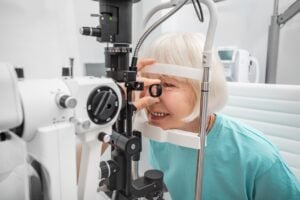
Chris Albanis, MD, from Chicago Arbor Eye Institute, explains that cataracts do not always begin with an obvious loss of sight. Familiar activities may simply start requiring more effort. Headlights seem brighter, a book needs a stronger lamp, or the edge of a step becomes harder to distinguish from the floor.
These changes are easy to dismiss as a normal part of getting older. Some people quietly stop driving after dark, increase the text size on their phones, or move more cautiously through unfamiliar spaces without connecting those adjustments to an eye condition.
Before having cataract surgery, Chicago patients can start by identifying how changes in sight are affecting daily life. A comprehensive eye exam can determine whether a cloudy natural lens is responsible or whether another condition also needs attention.
Why familiar tasks may start feeling more difficult
A cataract is a cloudy area in the eye’s natural lens. As the lens becomes less clear, sight may become blurry or hazy. Colors can look faded, bright lights may feel uncomfortable, and night vision may decline. Cataracts can also interfere with reading and other everyday activities [1].
Because cataracts usually develop gradually, people often adapt before recognizing how much their sight has changed. They may sit closer to the television, add brighter bulbs around the home, enlarge print, or rely more heavily on a spouse or family member.
Those adjustments can help for a while, but they may also conceal a meaningful decline in visual function.
A standard eye chart measures the ability to identify high-contrast letters under controlled conditions. Daily life is less predictable. A pale curb may blend into the sidewalk. Gray instructions may be hard to read on a white medication bottle. A white bathtub may not stand out clearly from a light-colored floor.
The ability to separate an object from its background is known as contrast sensitivity. When contrast is reduced, edges, lettering, and changes in flooring may become harder to notice, especially in dim light.
Families may notice behavioral changes before the older adult describes blurred sight. Someone may stop reading for pleasure, hesitate on stairs, avoid evening events, or appear less confident in unfamiliar buildings. These behaviors do not prove that cataracts are the cause, but they provide useful information for an eye doctor.
Glare and reduced contrast can make driving harder
Driving depends on several visual skills working together. A driver needs to follow lane markings, read signs, judge distance, notice pedestrians, and respond to movement. These tasks become more demanding when lighting is poor or bright light scatters through a cloudy lens.
Night driving often reveals the problem first. Oncoming headlights may create glare or halos, while dark vehicles, cyclists, and pedestrians become harder to separate from the background. Rain and reflections from wet pavement can add another layer of difficulty.
A person may still feel comfortable on a familiar road during the day but become uncertain at dusk. They might drive more slowly, avoid unfamiliar routes, ask someone else to take the wheel after dark, or skip evening activities.
Those decisions can affect independence and social connection. Avoiding nighttime trips may mean fewer family visits, missed community activities, or greater reliance on others. Changes in driving habits therefore deserve a calm discussion rather than criticism.
A 2016 review of the available evidence found that cataracts can negatively affect driving performance, crash risk, and the ways older adults limit their own driving. The review also found evidence that driving outcomes may improve after cataract surgery, although the included studies varied in design and do not provide one precise estimate that applies to every patient.
Families can ask whether headlights have become unusually bright, road signs are difficult to read until the car is close, or rain and darkness now make familiar routes uncomfortable. A driver who begins avoiding roads or times of day that were once routine should mention that change during an eye exam.
Reduced driving confidence does not automatically mean someone must stop driving. It does mean the cause should be evaluated. Cataracts may be involved, but glaucoma, retinal disease, an outdated prescription, dry eye, medication effects, and other health conditions can also interfere with driving.
Reading may require brighter light and more effort
Reading depends on more than recognizing individual letters. The eyes must maintain focus, follow lines of text, distinguish print from the page, and remain comfortable for an extended period.
Cataracts may make black text appear gray, reduce the sharpness of fine print, or create glare from glossy pages. A person may read for only a few minutes before the words begin to blur or the eyes feel tired.
Research involving older adults with relatively good high-contrast chart vision found that low-contrast performance contributed to reading ability [3]. The participants were older adults rather than cataract patients specifically, so the study does not show that cataracts were the sole cause. It does help explain why a standard chart result may not fully reflect a person’s experience with books, labels, menus, and forms.
Problems may become especially noticeable when reading:
- Medication labels and medical instructions
- Bank statements, bills, and forms
- Restaurant menus
- Appliance controls
- Food expiration dates
- Books, newspapers, and digital screens
Brighter, well-positioned lighting may help. Increasing font size, reducing reflections, and using high-contrast settings on digital devices can also make reading more comfortable while symptoms are mild.
Families should pay closer attention when reading problems begin affecting safety or independence. Misreading a medication dose carries a different consequence from choosing to put down a novel. Difficulty reviewing bills, following written instructions, or identifying food labels may create practical risks.
A new glasses prescription may help if focusing error is the main problem. If the cloudy lens is limiting the quality of light reaching the retina, stronger glasses may provide only partial improvement. An eye exam can help separate cataract symptoms from dry eye, macular disease, corneal problems, or other causes of reading difficulty.
Changes in depth perception may increase fall risk
Falls rarely have a single cause. Muscle weakness, balance problems, medications, blood pressure changes, home hazards, and neurological conditions may all contribute. Vision should be considered as one part of that larger safety picture.
Older adults use visual information to judge the height of a step, locate a curb, notice a loose rug, and detect changes in flooring. Cataracts can make edges less distinct by reducing clarity and contrast, making some hazards harder to identify.
Research in community-dwelling older adults has linked impaired depth perception, contrast sensitivity, and low-contrast acuity with fall risk [4]. These findings were not specific to cataracts, so they should not be interpreted as proof that a cataract caused a particular fall. They do show that the visual functions cataracts may disturb are relevant to safe movement.
Evidence on whether cataract surgery prevents falls is encouraging but still requires context. A 2021 systematic review and meta-analysis found that first-eye cataract surgery reduced the frequency of falls among older adults with cataracts in the included studies. The effect of second-eye surgery was not statistically significant, and fall outcomes can still be influenced by balance, strength, medication use, and the home environment [5].
Families may notice hesitation on stairs, difficulty seeing curbs in dim light, or a tendency to reach for walls and furniture in unfamiliar rooms. Other warning signs include tripping over objects that blend into the floor, avoiding outdoor walking near dusk, or experiencing falls and near-falls without a clear explanation.
Simple changes may improve safety while an eye evaluation is being arranged:
- Increase lighting in hallways, bathrooms, and near stairs.
- Mark step edges with contrasting material.
- Remove loose rugs, cords, and clutter.
- Use contrasting colors around bathroom fixtures.
- Keep commonly used objects in predictable locations.
An eye exam becomes particularly important when these problems appear alongside glare, faded colors, cloudy sight, frequent prescription changes, or difficulty seeing at night.
Chicago Arbor Eye Institute provides comprehensive eye exams and cataract evaluations across several Chicago-area locations. Its ophthalmology and optometry services may also help identify other conditions contributing to an older adult’s visual difficulties [6].
Cataracts should not be judged only by a number on an eye chart. The more useful question is whether sight still supports the person’s routine safely and comfortably. When driving, reading, stairs, or curbs begin requiring new workarounds, an eye exam can help families understand what has changed and what options remain.